DRSB Express Crisis: Causes, Cash Flow Concerns, WorldBridge Relationship, and Advice for Stakeholders
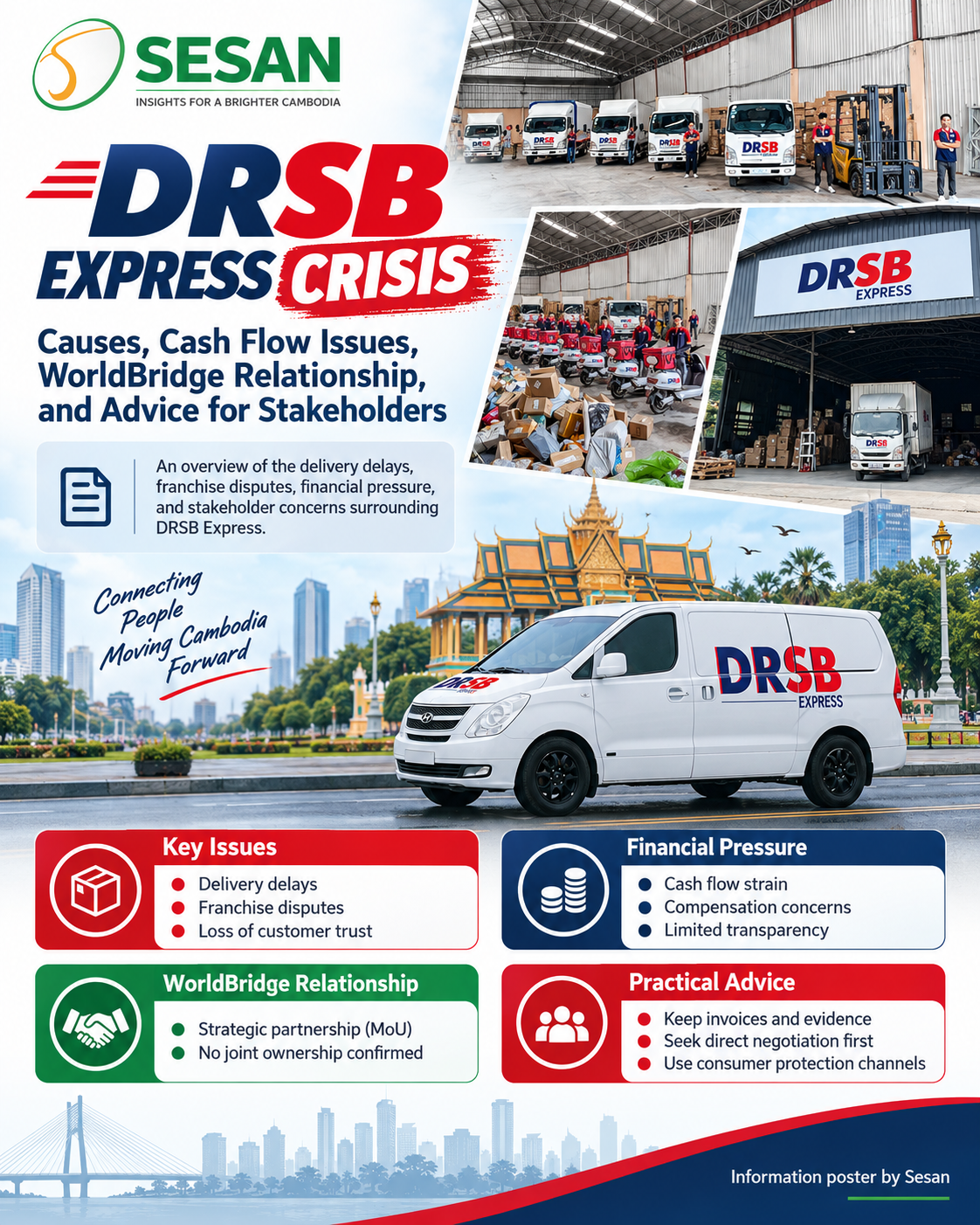
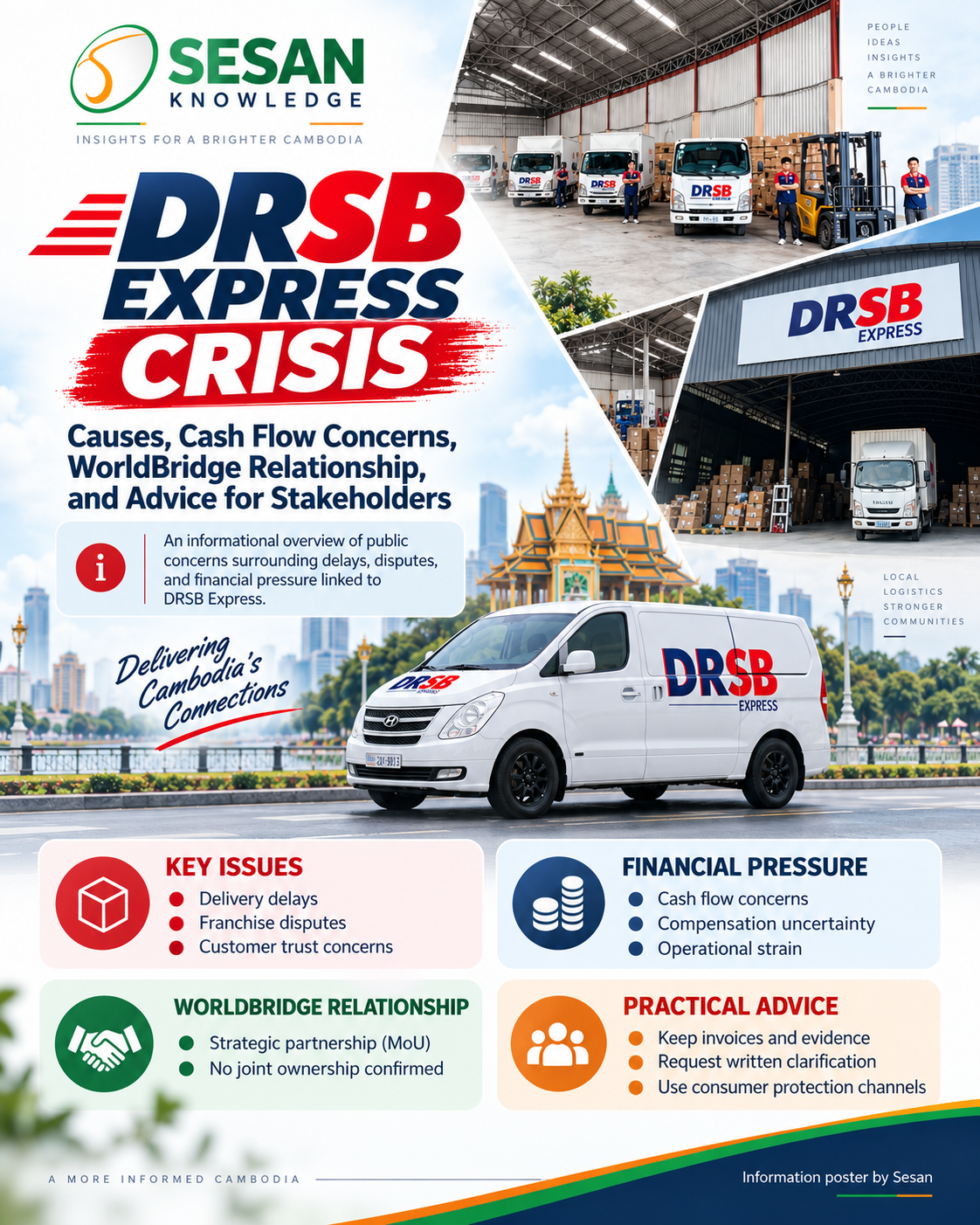
DRSB Express is facing growing public concern over delivery delays, franchise disputes, and questions surrounding its financial condition. At the same time, the company has maintained a strategic partnership with WorldBridge Group through a Memorandum of Understanding, while both parties have stated that there is no joint ownership or joint management between them. For customers and other stakeholders, the most practical approach is to preserve evidence, seek written clarification, attempt direct negotiation, and use official consumer protection mechanisms when necessary.
Share this article
The issues surrounding DRSB Express, a logistics and cross-border purchasing company operating in Cambodia, have attracted significant public attention. Public complaints and reports have raised concerns about delivery delays, disputes involving franchisees, service quality, and the company’s ability to manage financial obligations and customer compensation.
These concerns appear to involve several different factors rather than a single cause.
- Key Issues Raised by Customers and Stakeholders
Delivery Delays
Some customers have reported receiving their goods later than expected.
Public explanations have suggested that delays may be related to congestion at border checkpoints and stricter customs inspections in neighboring countries, including China and Vietnam.
However, delays can also create additional pressure on customer service operations and reduce trust when customers do not receive clear updates.
Franchise Disputes
Some franchisees have alleged that they paid substantial franchise fees but did not receive the full level of support, resources, or business benefits they expected under their agreements.
These claims should be treated as allegations unless confirmed through contractual evidence, official findings, or court decisions.
Financial Concerns
Public discussions and reports have also raised questions about the company’s financial condition.
Some observers have described the situation as financial pressure or a possible cash flow problem. However, determining the company’s actual financial position would require verified financial statements, court records, or official disclosures.
It is therefore more appropriate to describe the situation as financial pressure or cash flow concerns rather than concluding that the company is bankrupt.
2. Possible Causes of the Current Problems
The challenges facing the company may involve both internal and external factors.
Internally, problems may include weaknesses in franchise management, gaps between promises and implementation, operational pressure, unclear compensation procedures, and difficulties maintaining consistent service quality.
Externally, logistics companies can also be affected by customs restrictions, border congestion, international shipping disruptions, regulatory changes, and declining public confidence.
When operational problems and financial pressure occur at the same time, the effects can reinforce each other. Delivery delays can create customer complaints, complaints can damage trust, and declining trust can place further pressure on the company.
3. Is This a Capital Problem or a Cash Flow Problem?
There is currently an important distinction between cash flow difficulty and bankruptcy.
A business can experience serious cash flow pressure even while continuing to operate. This can happen when incoming cash is insufficient to cover immediate expenses, compensation obligations, salaries, or payments to business partners.
Public concerns surrounding DRSB Express have included delayed compensation, unclear refund procedures, and dissatisfaction with customer responses.
However, without complete and independently verified financial information, it would not be appropriate to state as a confirmed fact that the company has run out of capital or is bankrupt.
The more cautious description is that the company appears to be facing significant financial and operational pressure, based on publicly discussed concerns.
4. What Is the Relationship Between DRSB Express and WorldBridge Group?
According to publicly available information, DRSB Express and WorldBridge Group entered into a strategic partnership through a Memorandum of Understanding (MoU).
The purpose of the cooperation was described as strengthening Cambodia’s logistics and e-commerce ecosystem.
However, the two companies have also publicly clarified that the partnership does not represent joint ownership or joint management.
Therefore, the relationship should be understood as a strategic business partnership, rather than a merger, shareholding arrangement, or common management structure.
5. What Should Customers Do When a Dispute Occurs?
Customers who experience lost goods, delayed deliveries, refund problems, or compensation disputes should first preserve all relevant evidence.
This may include invoices, payment records, screenshots of conversations, tracking numbers, contracts, receipts, and written responses from the company.
Customers should also request explanations or compensation in writing rather than relying only on verbal communication.
Direct negotiation may be the fastest first step. If the issue cannot be resolved, customers may consider filing a complaint through Cambodia’s official consumer protection mechanisms.
Legal action may also be available depending on the circumstances, but litigation can involve costs, time, and uncertainty. Anyone considering court proceedings should seek professional legal advice based on the specific facts of their case.
6. Lessons for Businesses and Consumers
The situation provides several broader lessons for logistics companies, franchise businesses, investors, and consumers:
Businesses should separate company funds from personal funds, maintain adequate cash reserves, use clear contracts, communicate transparently during a crisis, and establish clear compensation procedures. Logistics companies should provide reliable tracking, clear delivery conditions, and transparent rules for lost or damaged goods. Franchise investors should carefully review contracts, financial information, obligations, support arrangements, and termination conditions before investing. Consumers should research service providers, understand refund and compensation terms, and preserve all transaction evidence. When a dispute cannot be resolved directly, customers should use official consumer protection channels or obtain legal advice. Conclusion
The DRSB Express situation demonstrates how operational problems, financial pressure, franchise disputes, and declining public confidence can affect a logistics business at the same time.
For businesses, transparency, financial discipline, reliable operations, and clear communication are essential for maintaining trust.
For consumers and investors, careful documentation, contract review, and the use of official dispute-resolution mechanisms can help reduce risk.
At the same time, claims about a company’s financial condition, ownership structure, debt, or legal liability should be based on verified evidence and official sources rather than speculation.
Editorial Note
This article is an informational overview based on publicly discussed issues and publicly available information. Allegations or claims mentioned in this article should not be interpreted as final legal findings unless confirmed by competent authorities or court decisions. Readers should consult official statements, court records, or qualified legal professionals when making decisions related to a specific dispute.