
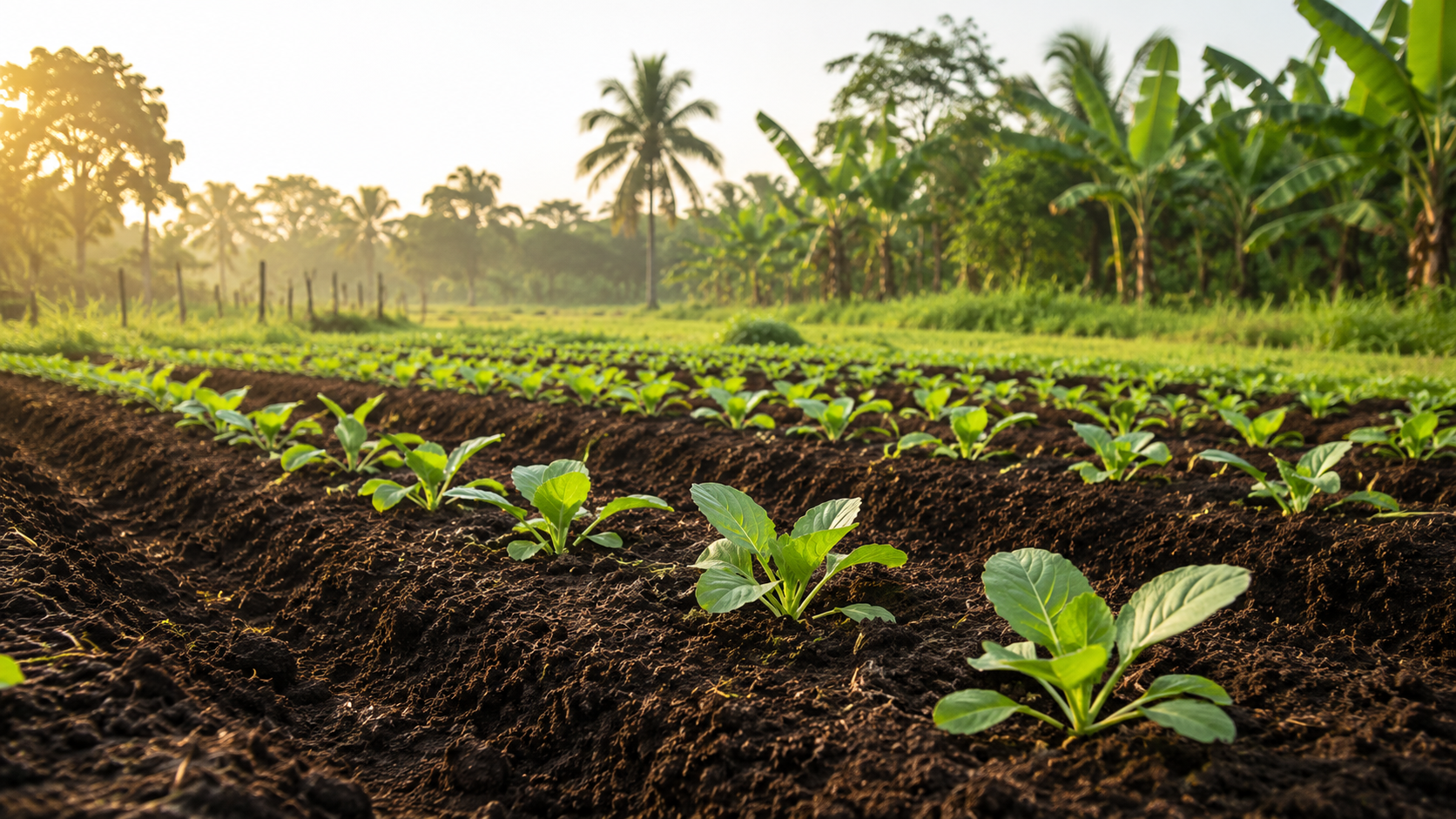
How to Prepare Soil for Healthy Vegetable Growth
Proper soil preparation helps vegetable roots grow well, absorb nutrients efficiently, prevents waterlogging and supports healthy plant development from the beginning.
Share this article
Soil is the foundation of healthy plant growth. Before planting vegetables, farmers should prepare the soil carefully so roots can develop easily and receive enough air, water and nutrients.
1. Clean the planting area
Remove weeds, old plant material, stones and other objects that may obstruct plant growth. Diseased crop residues should be removed from the planting area to reduce the risk of infection.
2. Loosen the soil
Dig or cultivate the soil to a depth of approximately 20 to 30 centimetres. Break large soil clumps into smaller pieces. Loose soil allows roots to grow deeper and improves water drainage.
3. Add organic matter
Mix well-decomposed compost or animal manure into the soil. Avoid applying fresh manure directly because it may damage roots and introduce harmful organisms. After mixing, leave the prepared soil for 7 to 14 days before planting.
4. Prepare proper drainage
In areas that are easily flooded, create raised planting beds and drainage channels between them. Most vegetables do not grow well when their roots remain in waterlogged soil.
5. Check soil moisture
Water the soil before planting until it is evenly moist but not saturated. Suitable soil should hold together slightly when squeezed but break apart easily.
6. Apply mulch after planting
Use rice straw, dry grass or another suitable material to cover the soil. Mulching helps retain moisture, suppress weeds and protect the soil from excessive heat. Leave a small space around each plant stem to prevent excess moisture from accumulating.
Careful soil preparation reduces future crop problems and improves the chance of achieving a healthy harvest. Farmers should also consider their soil type, local climate and the specific needs of each vegetable crop.