Cross-Border E-Commerce in Cambodia: Growing Purchases on Global Platforms and Opportunities for Local Platforms
Cambodia’s e-commerce market is growing rapidly as more consumers shop through international digital platforms such as Taobao, AliExpress and other global marketplaces. This article examines Cambodia’s e-commerce growth, the presence of foreign platforms, cross-border trade, and the opportunities for Cambodian platforms to help local producers, sellers and businesses participate more actively in the digital economy.
Share this article
Cambodia's E-Commerce Market Is Growing Online shopping is increasingly becoming part of everyday life in Cambodia. Consumers can search for products, compare prices, place orders and make payments for goods from both domestic and international sellers using their smartphones.
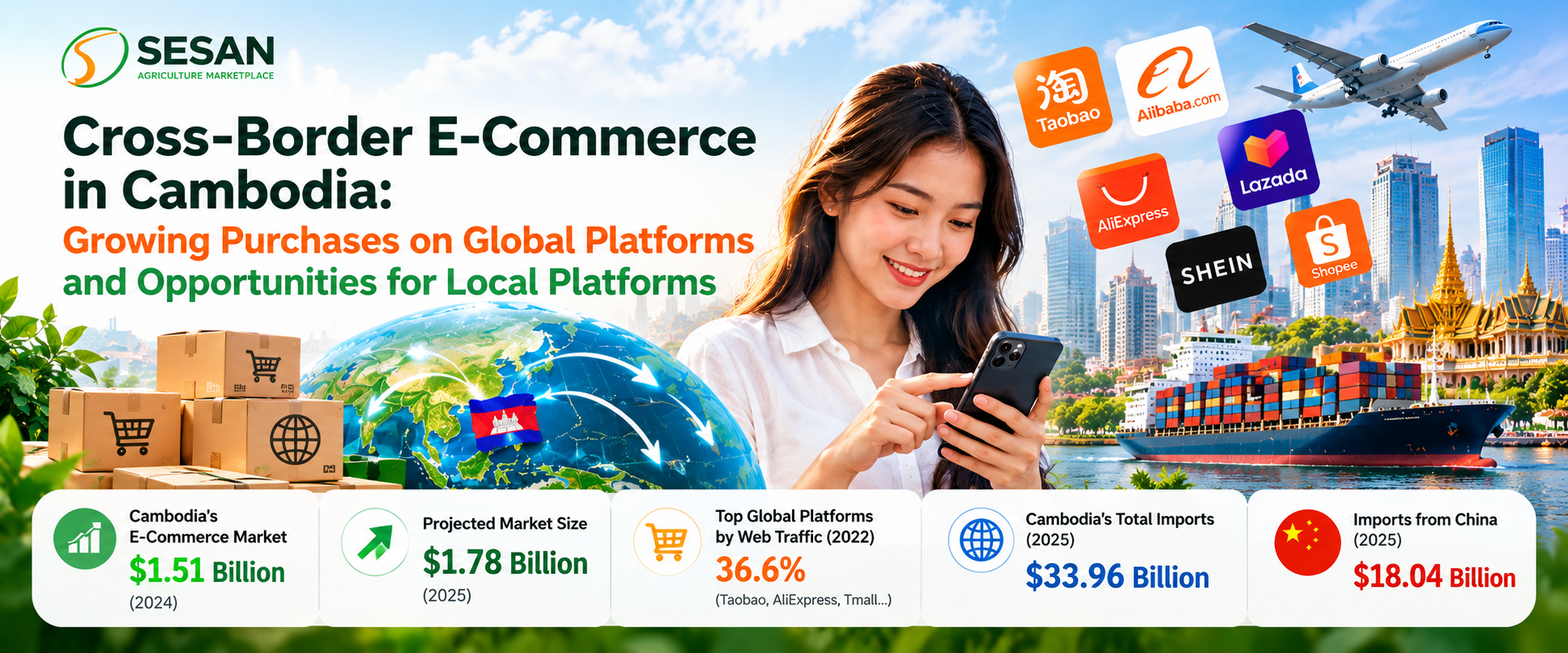
According to Cambodia's Ministry of Commerce, the country's e-commerce market was estimated at approximately US$1.51 billion in 2024 and was projected to reach approximately US$1.78 billion in 2025.
This growth demonstrates that digital commerce is becoming an increasingly important part of Cambodia's economy. Strong Presence of International Platforms International marketplaces, particularly platforms originating from China, have become important shopping channels for Cambodian consumers.
A United Nations ESCAP study analyzing marketplace data from 2022 found that only around 26% of the B2C marketplaces studied in Cambodia were owned by domestic companies, while the majority were internationally owned.
Among leading marketplaces by web traffic, the study reported Taobao at 14.9%, AliExpress at 11.7%, and Tmall at 4.7%. Four Chinese-owned platforms among the top 10 collectively represented approximately 36.6% of marketplace web traffic measured in the study.
It is important to clarify that the 36.6% figure represents web traffic, not the percentage of Cambodia's e-commerce spending transferred overseas. How Much Do Cambodians Spend on Foreign Platforms? There is currently insufficient publicly available data to determine exactly how much Cambodian consumers spend each year through individual foreign platforms such as Taobao, Alibaba, AliExpress, Lazada or other international marketplaces.
Cambodia's total e-commerce market size or total merchandise imports should therefore not be interpreted as the amount Cambodian consumers spend through foreign shopping apps. Cambodia Imports Billions of Dollars in Goods In 2025, Cambodia imported approximately US$33.96 billion in goods, with imports from China totaling approximately US$18.04 billion.
However, the US$18.04 billion figure does not represent Cambodian purchases through Taobao or Alibaba. It includes industrial inputs, machinery, electronics, construction materials, consumer goods and many other categories.
This distinction is important when discussing cross-border consumer e-commerce. Why Do Consumers Choose Global Platforms? International marketplaces offer enormous product selections, competitive pricing, advanced search systems and increasingly efficient logistics networks.
Cross-border e-commerce can also give Cambodian consumers access to products that may be difficult to find domestically.
The objective, therefore, should not simply be to discourage international shopping. A more important question is:
Can Cambodia make locally produced goods and local businesses as easy to discover, buy from and sell through as they are on major international platforms? Opportunities for Local Platforms As Cambodian consumers become increasingly comfortable using digital platforms, new opportunities are emerging for Cambodian entrepreneurs and technology companies to build platforms designed around local market needs.
Local platforms can have important advantages in understanding the Khmer language, provincial markets, local purchasing behavior, domestic payment systems, logistics and direct communication between buyers and sellers. Agriculture Also Needs a Digital Marketplace A farmer may need to sell crops while another user may be looking for vegetables, fruit, rice, seeds, fertilizer, agricultural inputs, animal feed, equipment or machinery.
Agricultural transactions may also require negotiation over price, quantity, location, transportation and pre-orders.
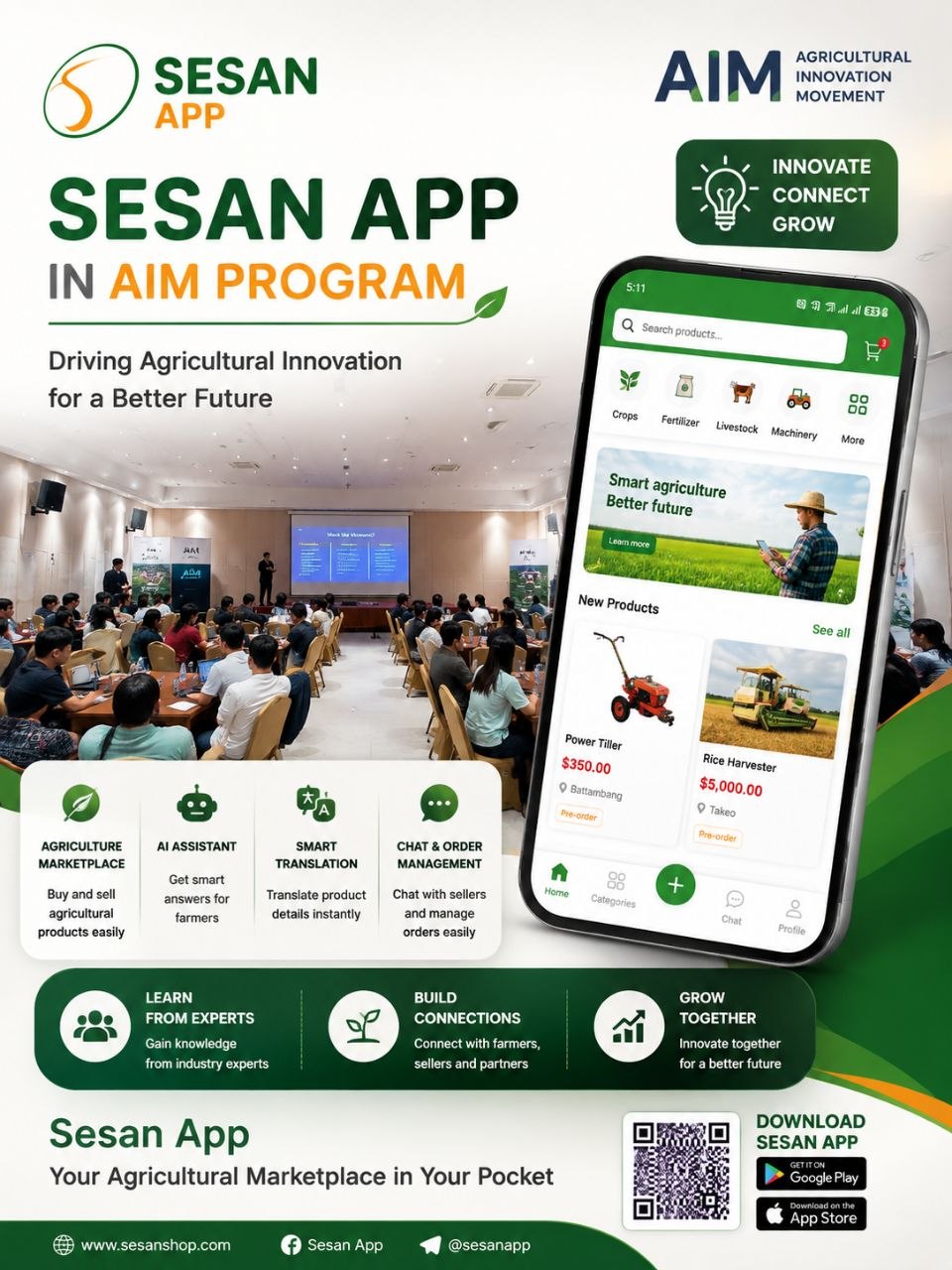
This creates an opportunity for digital platforms specifically designed around Cambodia's agricultural market. The Role of Sesan App Sesan App is being developed as a digital agriculture marketplace for Cambodia, connecting farmers, producers, sellers, buyers and service providers within one digital ecosystem.
The objective is not to replace international trade or prevent Cambodian consumers from purchasing foreign products. Instead, Sesan aims to provide an additional local option that makes Cambodian products and businesses easier to discover and helps them reach more customers.
As Cambodia's digital economy continues to expand, the future question should not only be:
“What are Cambodian consumers buying online?”
We should also ask:
“How much of this growing digital economy can Cambodian products, businesses and platforms participate in?”
Sesan believes technology should do more than make purchasing easier—it should also create more opportunities for local producers and businesses to sell, connect and grow.